Sabre MS: from internal software to an established product family
An ongoing creative partnership connecting brand, product experience and marketing as Sabre MS grew from internal software into an established product family.
Overview
Sabre MS did not start life as a software company.
Walter had originally developed the system while working as a partner at Rapier Employment. It was designed to solve problems Rapier was dealing with every day, automating parts of the recruitment process and making the business easier to manage.
As the system grew, it became clear that Rapier was not alone in facing those problems. Other recruitment companies were working through many of the same processes, and there was an opportunity to turn what had been built internally into a commercial product.
We were already working with Walter through Rapier, so Kreatif became involved with Sabre at a very early stage. Long before it became the business it is today, we were helping work out how it should look, how it should explain itself and how a piece of software built for one company could be presented to a much wider market.
Several years later, Sabre MS is a very different business. Sabre Rec has been joined by Sabre Agri, Sabre Training and Sabre Vend. The software has changed, the clients have changed and the way Sabre goes to market has changed with them.
Our work has changed too.
The challenge
In the beginning, Sabre had been built around Rapier.
That made perfect sense internally. The people using it already understood the processes, the terminology and the reasons behind the way things worked. Taking it outside that environment was a different problem.
New users would not have that background knowledge. Prospective clients needed to understand what Sabre did without sitting through a technical explanation. The software itself also needed to feel more intuitive to people seeing it for the first time.
And, perhaps most importantly, Sabre needed to look credible.
It was entering a market alongside established software providers with larger teams and much bigger profiles. There was no benefit in looking like the smaller company in the room.
As Walter explains:
“We therefore needed Sabre MS to look and feel like an established commercial product, while explaining clearly what it did and making it accessible to a much wider audience.”
Our first work centred on giving Sabre that foundation. A website, a clearer visual identity and the supporting material Walter needed to start putting the product in front of clients.
From there, things got considerably bigger.
Approach
One thing has remained fairly constant throughout our work with Sabre: there is usually quite a lot going on under the surface.
Recruitment, workforce management, onboarding, communication, training and vendor management all involve processes that make perfect sense to the people working with them every day, but can become difficult to explain to someone encountering the software for the first time.
Our job has often been to strip that complexity back.
Early on, that meant sales brochures, pricing documents, presentations, social graphics and product information. As new features were introduced, we would work out what mattered to the customer and how to explain it without burying them in detail.
Walter describes it rather neatly:
“Kreatif has consistently helped us distil that into clear language and visual design that potential clients can understand quickly.”
That principle began to influence more than the marketing.
As our understanding of Sabre grew, we became increasingly involved in the visual side of the product itself.
The Journey: From marketing Sabre to helping shape the experience
Sabre has never stood still for very long.
New functionality would be added. A new market would open up. A sales opportunity would need a presentation. A product would need repositioning. Something that made sense six months earlier suddenly needed looking at again.
That meant the work rarely arrived as isolated projects.
While Sabre's developers worked on the software, we worked on many of the things surrounding it. Websites, social content, brochures, product documents and sales presentations sat alongside UI graphics, icon sets, navigation, loading screens and interface design.
We also began using Figma to explore user journeys and prototype parts of the experience before they went into development.
There was a useful benefit to working on both sides.
The company being presented in a sales meeting started to feel much closer to the product the customer eventually logged into.
“The website, sales material and products increasingly feel like parts of the same coherent brand.”
Walter also points to the design of the software itself as one of the areas customers notice.
“One of the biggest compliments Sabre MS receives is the simplicity and clarity of its design. Kreatif has been a major contributor to that.”
That is particularly satisfying because simplicity in software rarely comes from having less going on. More often, it comes from doing the hard work of deciding what the user actually needs to see.
What was delivered
As Sabre developed, it also stopped being one product.
Sabre Rec was joined by Sabre Agri, Sabre Training and Sabre Vend, each aimed at different users and solving different operational problems.
They needed enough individuality to make sense in their own markets without looking like four unrelated businesses.
We extended the identity across the product family, developing visual assets, interfaces, icons, websites and marketing material that could change with each product while still feeling unmistakably Sabre.
Sabre Agri became a particularly good example of this. We worked on the UI and user journey, adapting the wider Sabre experience for an agricultural audience without simply reskinning the existing product and calling it finished.
As Walter puts it:
“They still need to feel recognisably part of the same company and share the same design principles.”
That became the rule we kept coming back to.
The Journey Continued: More than websites and graphics
Our role with Sabre has kept expanding because the business itself keeps expanding.
We have created onboarding forms to collect information from new clients, product and knowledge videos to help people use the software, and how-to content that supports existing customers after the sale.
More recently, we have become increasingly involved in SEO and content.
The latest Sabre website is part of that shift.
Earlier versions needed to establish the company and get attention. The current business does not have the same thing to prove.
The new direction is quieter and more assured. There is more emphasis on the products, the problems they solve and the experience Sabre has built up over the years.
Walter describes the change well:
“It no longer presents Sabre MS as an emerging software product with something to prove.”
That was exactly the point.
Sabre had matured. Its brand needed to catch up.
The result
Building confidence as the business grew
Walter had always had ten clients in his head as a milestone.
There was nothing scientific behind the number. It was simply the point at which Sabre would feel like it had gained real commercial momentum.
By the time the business reached it, a lot had changed.
The product was stronger, but so was everything surrounding it. Sabre had a proper identity, established sales material, an online presence and a growing body of content that made it easier to approach new opportunities without having to reinvent the company each time.
The aim was never to pretend Sabre was a huge software house.
It was to make sure being smaller did not make it look less capable.
“Kreatif has helped Sabre MS present itself professionally and credibly across every client touchpoint, allowing us to compete confidently alongside much larger businesses.”
That became particularly important when an opportunity with a major logistics business came along.
Competing for a major logistics business
Walter was realistic about Sabre's chances.
The pitch to a major logistics business was a substantial opportunity for Sabre Vend and the competition included larger, more established providers. Sabre was going to put itself forward, but nobody was treating the result as a foregone conclusion.
So we decided that if Sabre was going into the room, it was going in properly.
We developed a presentation specifically around the opportunity rather than adapting a generic sales deck. The supporting documents were designed, printed and finished as proper presentation pieces, right down to the matte laminated covers.
The point was not to disguise the size of the company.
It was to make sure the presentation reflected the quality of the thinking behind the proposal.
Sabre won the contract.
The logistics business went on to become an important client for Sabre Vend and, for Walter, confirmation that the business could compete for opportunities at that level.
He is also quite clear about the role the presentation played:
“I believe the strength of that presentation and the way we positioned Sabre MS helped get us over the line. It gave the quality of our proposed solution the professional platform it needed.”
That sentence probably explains our role in Sabre better than any list of services could.
Good design did not win the contract on its own.
It made sure the business and the idea were judged on their merits.
The Result: A partnership that grew with the business
It is difficult to separate the individual Sabre projects now.
There have been several websites. Countless pieces of marketing material. Product interfaces. Videos. Presentations. Icons. Social campaigns. Sales documents. Prototypes. Forms. Content.
But the reason the relationship works is not the quantity.
It is the context behind it.
After working with the business for so long, Walter does not need to write a formal brief explaining what Sabre is every time something new comes up. Quite often, a conversation is enough.
That saves time, but it also changes the kind of work we can do.
We can question an idea when we think there is a better approach. We can spot a problem because we remember why something was done three years ago. We can think about how a new feature affects the website, sales team and product rather than seeing each one as a separate job.
Walter puts that better than we could:
“They understand not only our products, but also how we think and what we are trying to achieve.”
And perhaps more importantly:
“Over time, they have become contributors to our solutions rather than simply implementors.”
That is probably the biggest difference between where this relationship started and where it is today.
There is a personal side to that relationship too.
After years of working together, there is trust on both sides. Walter knows we will tell him if we think something can be better. We know he is open to ideas rather than simply looking for somebody to follow instructions.
When asked what he values most, his answer was not design, speed or even reliability.
It was judgement.
“I can bring Kreatif an idea that is not yet fully formed and trust them to understand what we are trying to achieve, challenge it where necessary and help shape it into an effective solution.”
Sabre will almost certainly change again.
Based on the last few years, we would be more surprised if it didn't.
And that is really what makes this project different from most case studies. There is no final reveal where everybody shakes hands and walks away.
We are still working on it.
Client feedback
“I would describe it as a long term creative and strategic partnership. Kreatif operates as an extension of Sabre MS rather than as an external design supplier.”
“They have helped shape not only how Sabre MS looks, but what it has become.”
More work
More work. Different challenges. The same attention to detail.
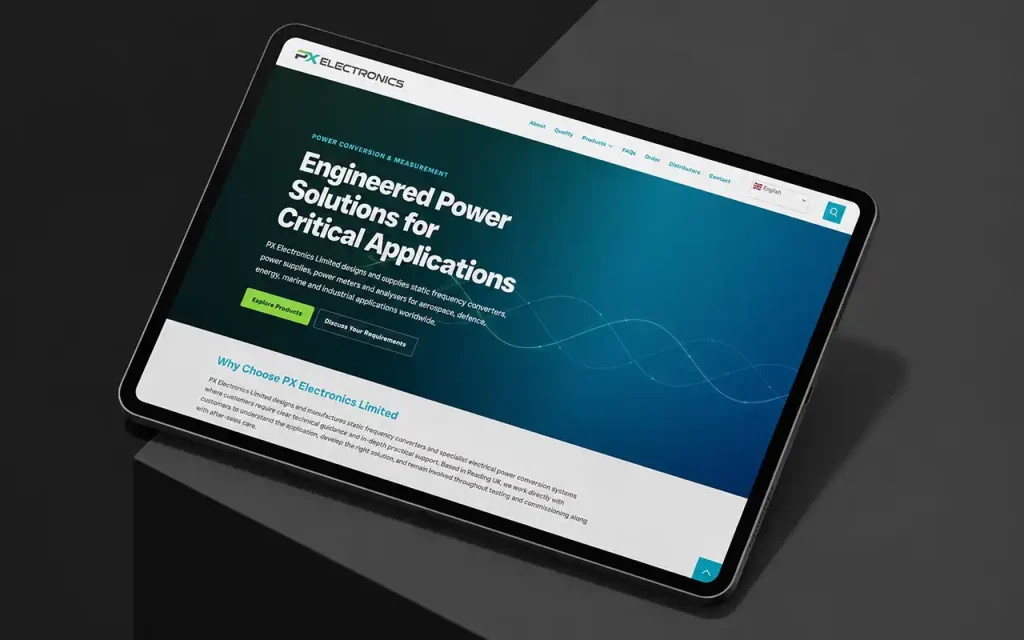
PX Electronics: making a complex catalogue easier to navigate
A clearer structure for a specialist electrical power catalogue, connecting product categories, technical information and international audiences.
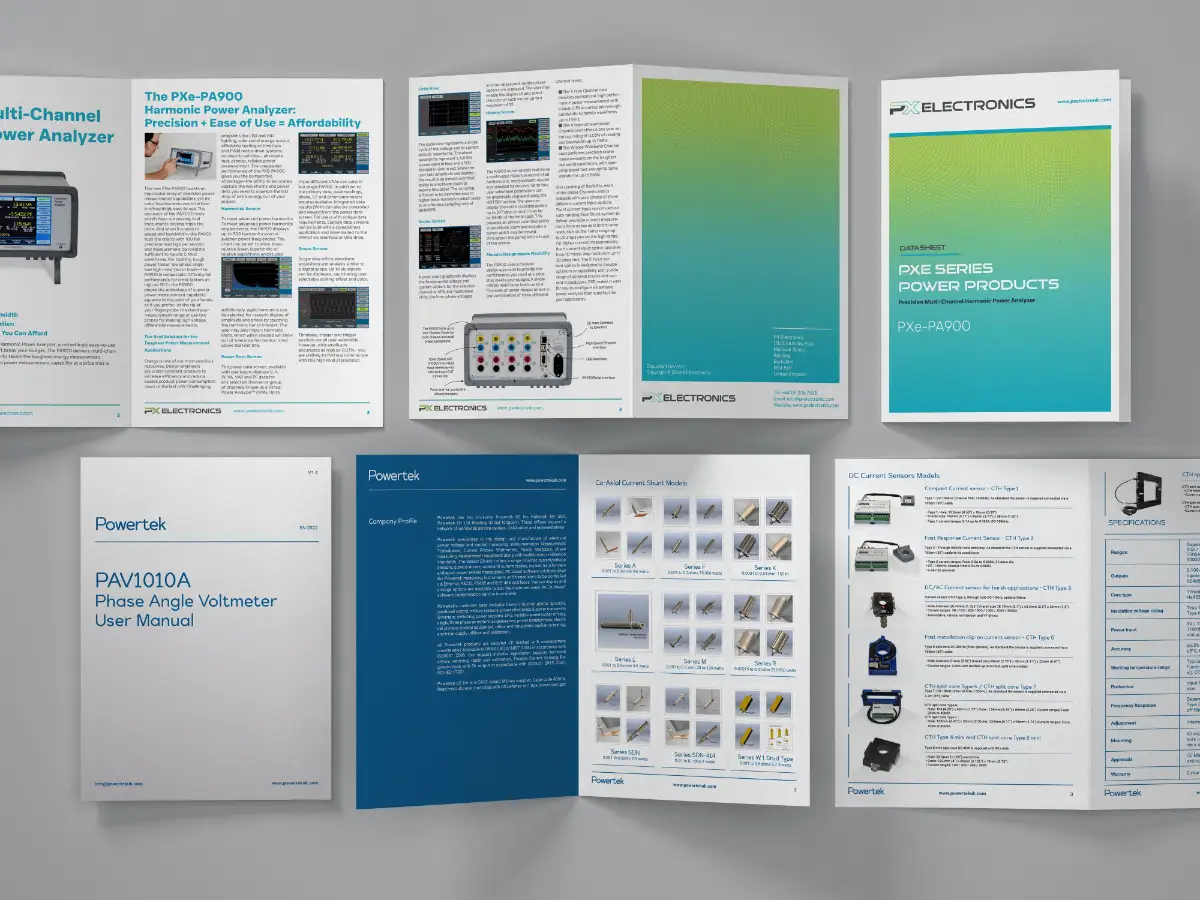
Modernising Technical Documentation for Powertek
Powertek needed one clear format for decades of technical datasheets. Kreatif designed a practical documentation system they could roll out across hundreds of products — and extend to sister brand PX Electronics.
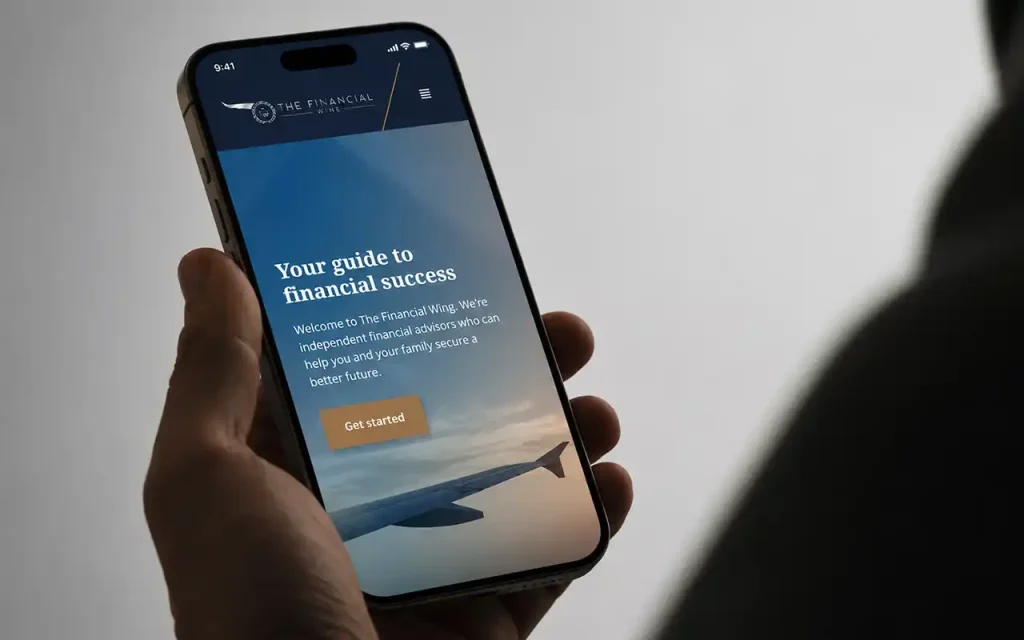
The Financial Wing: a clearer digital journey
Turning specialist aviation knowledge into a clearer digital journey, with focused landing pages, accessible service content and connected marketing materials.